
Indrahar Pass Trek
Summarize this with AI
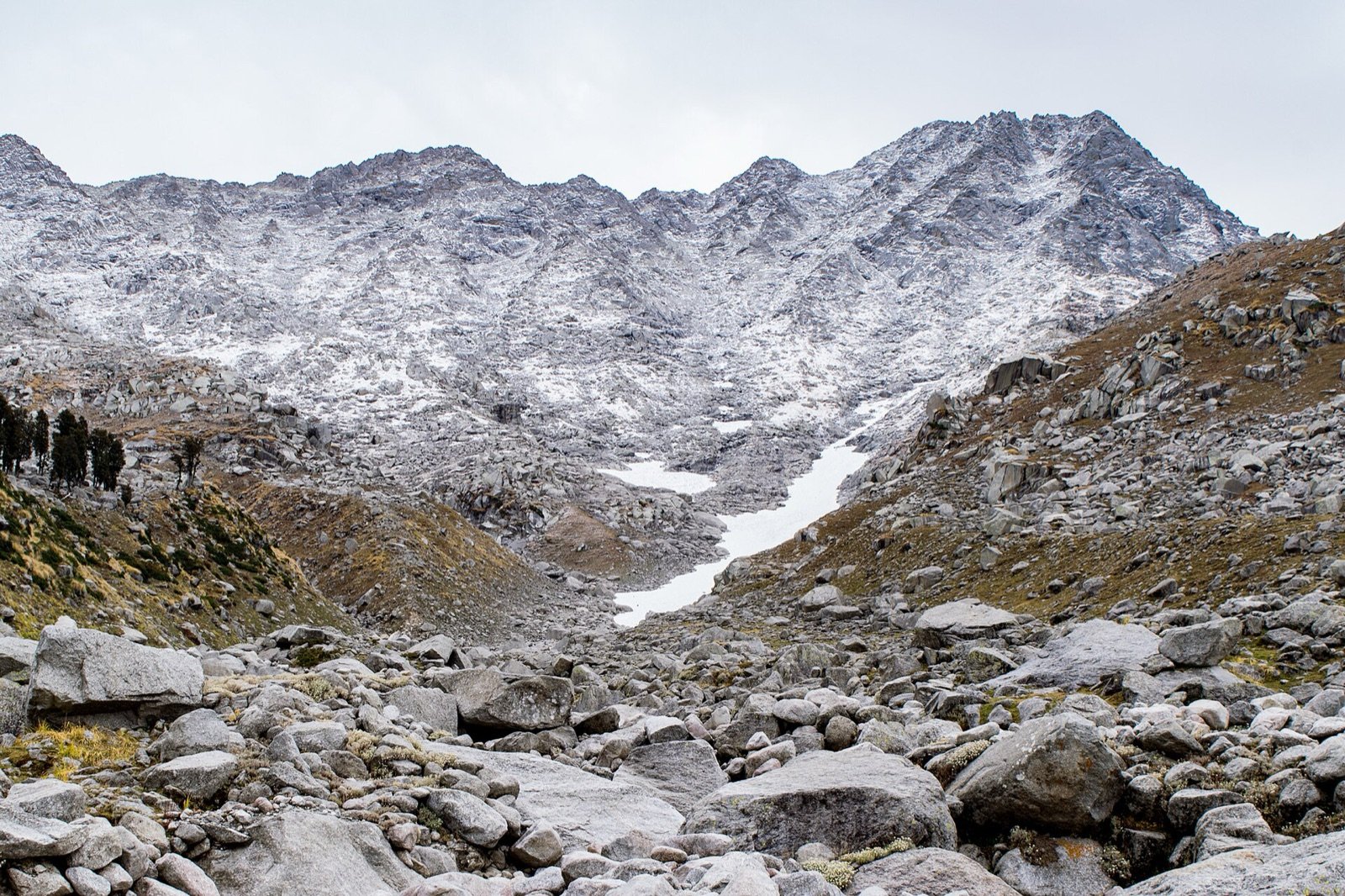
Photo: Ashish Gupta from Noida, India / CC BY 2.0, via Wikimedia Commons
Overview
The best-known crossing of the Dhauladhar, Triund, Lahesh Cave and a steep final climb to a 4,342 m notch on the Kangra–Chamba border.
Indrahar is a working route, not a modern invention. For centuries it was one of the main ways of moving between Kangra and Chamba on foot, used by Gaddi shepherds driving flocks to summer pasture and by traders crossing between the two valleys. Flocks still cross it today.
Lahesh Cave, the last shelter before the pass, is simply a large overhanging rock that shepherds have used for generations. It has no construction beyond a low stone wall built up on the windward side. Trekking groups now use it as the final camp for exactly the same reason the Gaddi did, it is the last protection before the climb.
The Dhauladhar is a front range: it rises straight off the Kangra plains with no foothills to soften it, climbing from roughly 800 m to over 4,500 m in about 20 kilometres of horizontal distance. That is why the wall looks so improbably steep from below, and why the views open so abruptly once you gain the ridge.
Highlights
- Following a genuine centuries-old trade and shepherd route, not a manufactured trekking trail
- A night at Lahesh Cave, a natural rock overhang shepherds have sheltered under for generations
- Watching Gaddi flocks cross the same pass they have used for centuries
- The classic Dhauladhar crest crossing at 4,342 m, the most popular of the range's traverses
- Sweeping views back over Kangra and forward into Chamba from the pass itself
Conditions
Best attempted in clear weather. Carry layers; temperatures drop sharply after sunset.
What's included
- Certified trek leader and support staff
- All meals on the trail (veg, fresh-cooked)
- Camping and sleeping equipment
- First-aid kit and oxygen support
- Forest and camping permits
- Transport between the two trailheads (start and end points differ on a traverse)
- Travel to the starting trailhead and from the finishing trailhead to your base
- Personal trekking gear (shoes, backpack, etc.)
- Travel insurance
- Mule or porter for personal luggage
- Any meals outside the itinerary
Route stages
| Stage | Distance | Altitude | Time |
|---|---|---|---|
| 1McLeod Ganj → Triund ridge | 9 km | 2,875 m | 4–5 h |
| 2Triund → Ilaqa Got (via Snowline) | 3 km | 3,000 m | 1–2 h |
| 3Ilaqa Got → Lahesh Cave | 3 km | 3,300 m | 2–3 h |
| 4Lahesh Cave → Indrahar Pass | 4 km | 4,342 m | 2–6 h |
| 5Return to McLeod Ganj | 16 km | — | 1–2 days |
Best time to go
| Month | Conditions | Status |
|---|---|---|
| January–March | Deep snow on the pass | Closed |
| April | Snow lingering above 3,500 m | Limited |
| May–June | Pass usually clear, settled weather | Best |
| July–August | Monsoon, with rockfall risk and poor visibility | Avoid |
| September–October | Clearest and most stable conditions | Best |
| November | Early snow closes the pass | Limited |
| December | Impassable without mountaineering equipment | Closed |
Getting there
- By air
- Gaggal / Kangra Airport (DHM), about 15 km from Dharamshala. Direct flights from Delhi take roughly 1 hour 30 minutes.
- By rail
- Pathankot is the nearest broad-gauge railhead, about 90 km away. Onward by road takes roughly 3 hours.
- By road
- Delhi to Dharamshala is about 480 km, 10 to 12 hours by overnight bus. Chandigarh is about 250 km, roughly 6 hours.
- Trailhead
- Galu Devi temple above Dharamkot, about 30 minutes by taxi from McLeod Ganj. Most groups walk in from McLeod Ganj instead.
Frequently asked questions
- How high is Indrahar Pass?
- 4,342 metres (14,245 ft). It forms the border between Kangra and Chamba districts in the Dhauladhar range.
- How many days is the Indrahar Pass trek?
- Most trekkers complete it in 3 to 4 days out and back from McLeod Ganj. Continuing over into Chamba adds one to two days.
- How difficult is Indrahar Pass?
- Moderate to difficult. The final climb from Lahesh Cave to the pass is steep, rocky and often snowbound, taking anywhere from 2 to 6 hours depending on conditions.
- What is Lahesh Cave?
- A natural rock shelter at around 3,300 m used for generations by Gaddi shepherds and now the standard last camp before the pass.
- When is Indrahar Pass open?
- Roughly April to October. Outside that window snow makes the final section unsafe without mountaineering equipment.
Nearby
- Bhagsunag Falls and temple, 2 km from McLeod Ganj
- Namgyal Monastery and the Dalai Lama temple, 1 km, McLeod Ganj
- Naddi viewpoint, for sunset over the Dhauladhar, 4 km
- Dal Lake, Dharamshala, 5 km
- Norbulingka Institute, Tibetan arts, 12 km
- Kangra Fort, 22 km
- Masroor Rock Cut Temples, 45 km
Description Content
Indrahar Pass is the classic Dhauladhar crossing and the high point of trekking out of Dharamshala. At 4,342 metres (14,245 ft) it sits on the border between Kangra and Chamba districts, a narrow notch in a wall that otherwise runs unbroken for tens of kilometres.
The route
The trail follows the Triund approach from McLeod Ganj, then continues past Snowline to Ilaqa Got and up to Lahesh Cave at around 3,300 m, a natural rock shelter long used by Gaddi shepherds and now the standard final camp. From the cave the pass is a steep climb of two to six hours over rock and, for much of the season, snow. Round trip from McLeod Ganj is approximately 35 km.
The pass day
Groups leave the cave in the dark to reach the pass and get back down before the weather turns. The last section is the steepest ground on the trek and frequently requires care on snow. From the top the view opens north across Chamba and the Pir Panjal beyond, the moment the trek exists for.
Difficulty and fitness
Graded moderate to difficult. Prior trekking experience is expected. Trekkers should be able to manage sustained steep ascent at altitude and be comfortable on exposed rock. This is a serious day, not a walk.
Crossing to Chamba
Rather than returning the way you came, the pass can be crossed and descended into Chamba district via Chatta Parao and the Gaddi village of Kuarsi. That variant is offered as our Chamba Valley Trek via Indrahar Pass.
Gallery