
Cultural
Leh Monasteries & the Indus Valley
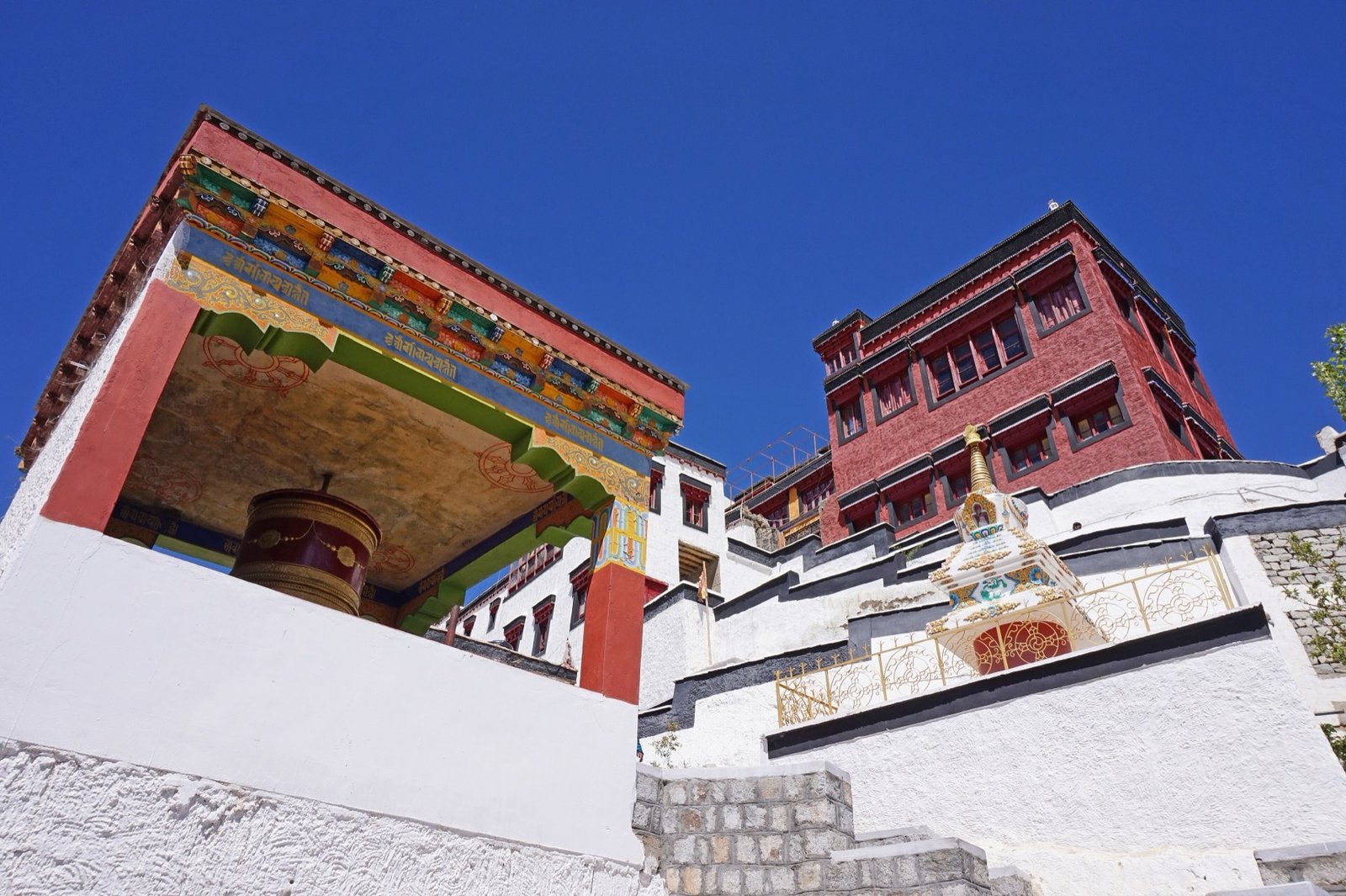
Photo: Bernard Gagnon / CC BY-SA 4.0, via Wikimedia Commons
Overview
A short, low-altitude introduction to Ladakhi Buddhism, Thiksey, Hemis, Alchi and Lamayuru along the Indus, with no high passes and no camping.
The Indus is the reason Ladakh is habitable. Almost every village, monastery and field in central Ladakh sits along the narrow green ribbon the river carves through otherwise bare rock, and the monasteries were sited deliberately to overlook it.
Alchi is the outlier and the highlight. Founded in the eleventh century, it sits on the valley floor rather than a hilltop, and because it was abandoned rather than rebuilt its wall paintings survive in a Kashmiri style that has disappeared almost everywhere else in the Himalaya.
This tour stays between roughly 3,000 and 3,750 m and crosses no high passes, which makes it a realistic option for travellers who are short on time, travelling with older family members, or who would rather not spend a day at 5,000 m.
Day-by-day itinerary
-
Day 1
Arrive Leh, rest
Airport transfer and a full rest day at 3,500 m. Leh Palace and the bazaar in the late afternoon only if you feel well.
-
Day 2
Thiksey, Hemis and Shey
The three great Gelug and Drukpa monasteries of the upper Indus, timed to catch the morning prayers at Thiksey.
-
Day 3
Alchi, Likir and Lamayuru
West along the Indus to the eleventh-century Alchi complex, then Likir, and on to Lamayuru with its moonland rock formations.
-
Day 4
Magnetic Hill, Sangam and depart
The Indus–Zanskar confluence and Magnetic Hill on the way back, then the airport.
Places covered
| Place | Altitude | Notes |
|---|---|---|
| Leh | 3,500 m | Base town, palace and old bazaar |
| Thiksey Monastery | 3,600 m | Morning prayers and the Maitreya Buddha |
| Hemis Monastery | 3,600 m | Seventeenth-century Drukpa foundation |
| Shey Palace | 3,400 m | Former royal residence and copper Buddha |
| Alchi | 3,100 m | Eleventh-century Kashmiri-style wall paintings |
| Lamayuru | 3,750 m | Oldest monastery in Ladakh; moonland formations |
| Sangam | 3,000 m | Confluence of the Indus and Zanskar rivers |
What is included
Included
- Airport transfers in Leh
- Accommodation on twin-sharing basis
- Private vehicle with driver
- Breakfast and dinner
- Monastery entry fees
Not included
- Flights to and from Leh
- Lunches and personal expenses
- Travel and medical insurance
- Camera fees at some monasteries
Permits & altitude
No Inner Line Permit is required for this route, because everywhere on this itinerary lies within the open central Indus valley.
Altitude is still the main consideration. Leh is at 3,500 m and the flight from Delhi takes you there in under two hours, so the first day is a rest day regardless of how well you feel on landing.
Monasteries are working religious buildings. Shoes off in prayer halls, walk clockwise around stupas and chortens, and ask before photographing monks or interiors.
Best time to go
| Month | Conditions | Status |
|---|---|---|
| January–April | Passes closed, extreme cold, most road routes shut | Closed |
| May | Srinagar highway usually opens, lakes still partly frozen | Limited |
| June–July | All roads open, warm days, cold nights | Best |
| August | Occasional landslides on the approach highways | Good |
| September | Clearest skies and thinnest crowds of the year | Best |
| October | Cold sets in, road routes begin closing | Limited |
| November–December | Road access closed, flights only | Closed |
Getting there
- By air
- Kushok Bakula Rimpochee Airport (IXL) at Leh, with direct flights from Delhi taking roughly 1 hour 20 minutes. Flying in means arriving at 3,500 m directly, which makes the first rest day non-negotiable.
- By road (Srinagar)
- The Srinagar–Leh highway, about 420 km over Zoji La and Fotu La, usually open from around May to October. Two days with a night at Kargil.
- By road (Manali)
- The Manali–Leh highway, about 470 km over Baralacha La and Tanglang La, usually open from around June to September. This is the more spectacular and the more demanding of the two approaches.
Frequently asked questions
- Is this suitable for older travellers?
- Yes, more so than the Nubra and Pangong circuit. It crosses no high passes, stays between about 3,000 and 3,750 m, and involves short drives with no camping.
- Do I need a permit for this tour?
- No. The whole route lies in the open Indus valley, outside the protected areas that require an Inner Line Permit.
- What makes Alchi special?
- It is one of the oldest surviving monastic complexes in Ladakh, built on the valley floor rather than a hilltop, with eleventh-century Kashmiri-style wall paintings that survive nowhere else in this condition.
- Can this be combined with the Nubra and Pangong circuit?
- Yes. It works well as the first four days, since the acclimatisation it provides sets you up for the higher passes.
About this tour
A short, low-altitude introduction to Ladakhi Buddhism, Thiksey, Hemis, Alchi and Lamayuru along the Indus, with no high passes and no camping.
Detailed inclusions, hotel list and departure dates are confirmed at booking.